
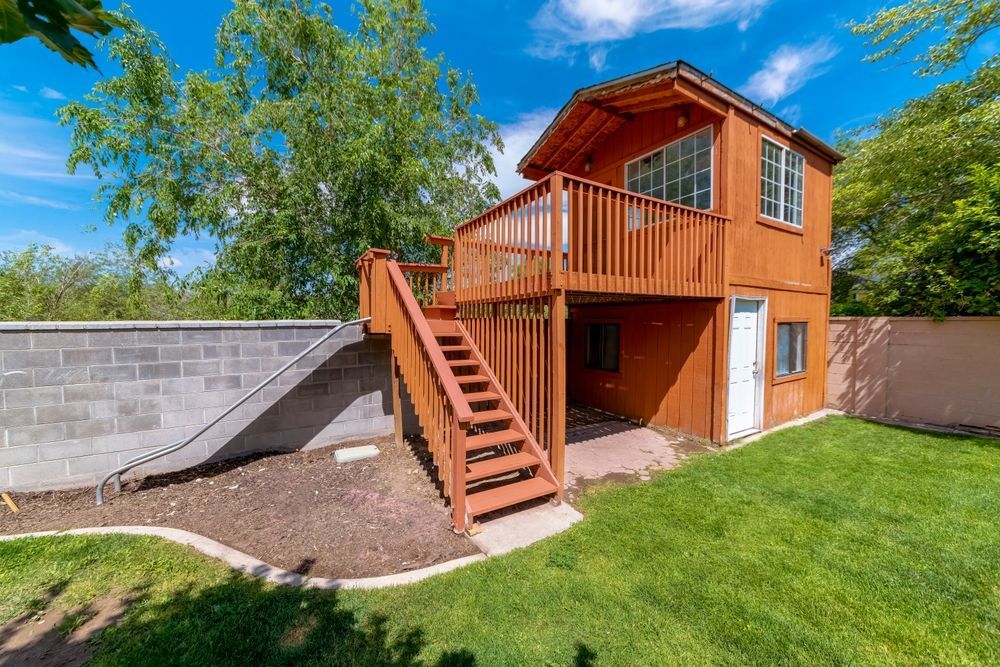
Add Usable Outdoor Space with Solid Construction
S & D Sheds LLC builds decks and porches that complement portable structures and improve access to outdoor buildings.
Decks and porches turn empty ground into functional outdoor space where you can step out of a studio, tiny home shell, or shed without stepping directly onto dirt, gravel, or mud. You gain a level surface that supports furniture, tools, or foot traffic, and you make entering and exiting the building easier, especially during wet weather. S & D Sheds LLC constructs decks and porches designed to handle outdoor conditions, integrate with existing structures, and provide long-term stability without constant maintenance.
The construction process involves leveling the ground, setting posts or supports, and building a frame that attaches to or sits adjacent to your building. Decking boards are spaced to allow water drainage, and railings are added when the height requires them for safety. Materials are selected to resist warping, cracking, and insect damage, and the design accounts for how you plan to use the space. Popular applications include entry porches for tiny homes, raised decks for studios, and covered outdoor areas for sheds used as workshops.
Contact S & D Sheds LLC to discuss deck and porch options that match your building type, property layout, and how you intend to use the outdoor space.
How a Deck Changes Building Access
After the deck or porch is built, you step out of your building onto a solid, level surface that stays clean and dry even when the ground is wet or uneven. The structure provides a clear boundary between the building and the surrounding yard, and it reduces wear on the doorway by eliminating mud, gravel, and debris tracked inside. Furniture, planters, or equipment sit securely without sinking or tipping, and you can move in and out of the building without navigating unstable ground.
Decks built for outdoor conditions resist splintering, fading, and moisture damage longer than untreated wood or temporary platforms. The frame is anchored to prevent shifting during storms or heavy use, and the boards are fastened to avoid loosening over time. Proper spacing between deck boards allows rainwater to drain rather than pool, and the height is adjusted to match the building's threshold so the transition feels natural.
Construction accounts for door swing, stair placement, and any railings required for safe use. Decks do not replace proper grading or drainage around the building, and they should not block vents or interfere with utility access. The final design reflects both the building's footprint and the way you use the outdoor space, whether that's sitting, working, or simply stepping outside without tracking mud indoors.
Anchor Installation Pricing and Details
Protect your portable building with
professional anchor installation for added stability and long-term security. Below is our pricing breakdown, as well as service details for each project.
Pricing - $75 per anchor
Pricing includes:
- Anchors
- Straps
- Bolts
- Professional Labor
Important Service Details:
- Anchor installation is completed
after the building has been delivered
- This service is separate from the building delivery service
- Scheduling is required
For scheduling, questions, or concerns, please contact:
David Ritter - (361) 319-5063
Homeowners and property owners often want to know how decks attach to portable buildings, what materials last longest, and how the construction process affects access to the building during the project.
What People Ask About Deck Projects
S & D Sheds LLC designs decks and porches to match your building's height, door placement, and the way you use the outdoor area. Get in touch to review material options, railing requirements, and construction timing that fits your project schedule.